
Q4’2025 Update: Consumer Confidence Maintains Steady Trajectory

Welcome to Malaysians on Malaysia (MOM): Oppotus’ quarterly report that provides in-depth insights into the Malaysian Consumer Confidence Index (MYCI). It is an ongoing effort to offer insights into Malaysia’s evolving market landscape. This edition delves deeply into the latest consumer trends and key influencing factors, including financial outlook, economic confidence, digital payments, tech trends and more, offering a fresh perspective for strategic decision-making. Join us as we unravel the driving forces of this quarter and its potential implications.
Consumers’ confidence in the fourth quarter holds a steady outlook, which is reflected in our MYCI index. During this quarter, several major events took place, including hosting of the 47th ASEAN Summit, which put Malaysia in the forefront of the global stage, as highly influential leaders from China and United States of America visited the country. Moreover, Budget 2026 was tabled and announced to address the cost of living, good governance, and strengthening social protection for vulnerable groups. Before we dive deeper into this chapter, readers are encouraged to revisit the Q3 2025 MOM report.
Stable MYCI Sentiments
Malayians’ confidence in Q4 held steady at 136 points, which is one point below the previous quarter. The last two quarters of 2025 have given consumers better confidence, as during the Budget 2026 announcement, to address the cost of living by providing 9 million Sumbangan Tunai Rahmah (STR) recipients to receive Sumbangan Asas Rahmah (Sara) assistance up to RM100 per month, or RM1,200 per year. Moreover, East Malaysia is expected to see an increase in development as there is up to RM6.9 billion allocated to improve the quality of life.
Continuous Positive Economic Outlook
Positive economic growth continues in quarter four with an optimistic 131 points compared to quarter three at 129 points. This mirrors Malaysia’s GDP economic growth of 6.3% in Q4 2025, up from 5.4% in Q3 2025. The rise was driven by domestic demand with a higher household spending, steady investments activites and continued demand for electrical and electronics (E&E) goods.
E-wallet Transitioning from Growth to Habit
Malaysians added a new habit to their financial lifestyle, which is e-wallet usage — resulting in the Q4 2025 report almost mirroring the previous quarter. The confidence level can also be seen in the average monthly e-wallet spending, which is at an all-time high of RM549.10 in quarter four. Touch n’ Go has been the market leader, and the other 4 has been fighting and claiming their positions to be the top. The latest knock off was BigPay, as Aeon e-wallet usage has surpassed them this year.
If you are eager to dive deeper into these numbers and gain a more nuanced understanding of the forces shaping the future of business and finances, reach out to us at theteam@oppotus.com. You can also hop onto our alternative service, Oppotus DoubleDecker, an Omnibus solution to gain a first-hand preview of our next Malaysians on Malaysia (MOM) report.
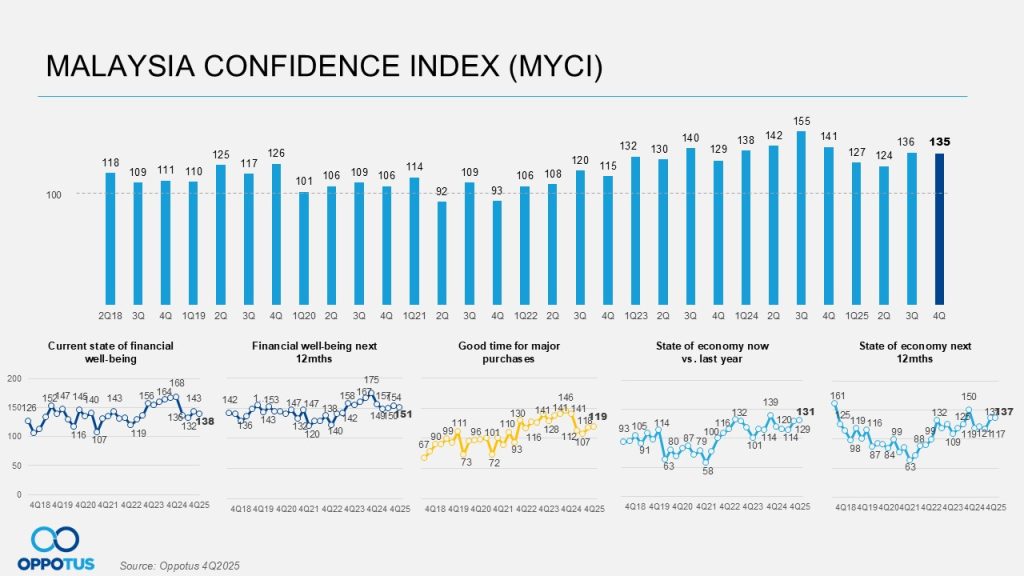
The positive outlook of Malaysian Consumer Confidence Index (MYCI) in Q3 2025 extends to Q4 2025 by scoring a stable 135 points, though it is only one point lower than the previous quarter — it is still projecting a stable outlook.
There were a few key events that happened during the last quarter, especially the Budget 2026, which has had a good impact on consumers and businesses. One of the key takeaways from the announcement was the aid, social welfare and cost of living measures — consumers are expected to receive Sumbangan Asas Rahmah (Sara) assistance up to RM100 per month, or RM1,200 per year. While one million Sumbangan Tuani Rahmah (STR) recipients under the e-Kasih programme will also receive up to RM200 per month, or RM2,400 annually, under Sara. In conjunction with Deepavali, which was celebrated in October 2025, STR Phase 4 payments were advanced to October as originally scheduled for November.
Aside from the Budget 2026 announcement, the 47th ASEAN Summit was held in Malaysia in the same month. During this historical event, Malaysia was placed at the forefront of the global stage, giving consumers and investors much confidence.
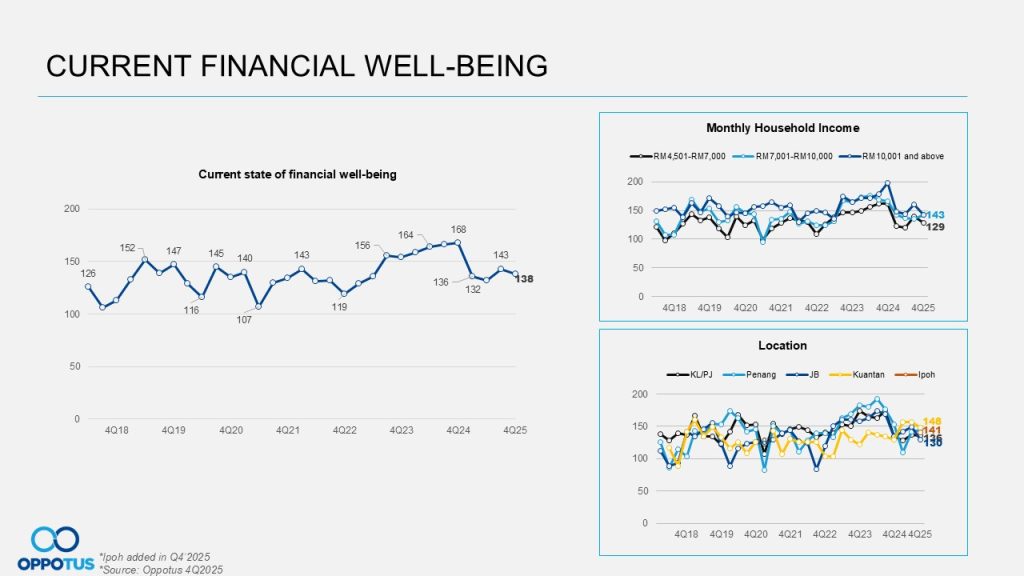
Despite the perceived optimism, sentiments of Malaysians’ financial well-being fell to 138 points. It is a dip from the previous quarter by 3.5%, which is likely contributed to by the inflation. This marginal dip is impacting the lower M40 group more starkly.
The impact on Johor is also reflected in a recent DOSM’s report, mentioning that in December 2025, Johor is leading the inflation rate at 2.3% amongst the five states that are impacted by an above average inflation. As a whole, Malaysia’s December 2025 inflation rose to 1.6% year-on-year, driven mainly by higher prices for personal care items, education, and selected household-related costs. Based on DOSM, the inflation for the year 2025 is averaged at 1.4%, easing from 1.8% in 2024. Moreover, this slow pace was mainly due to more moderate increases in housing-related costs, transport and health, alongside information and communication.
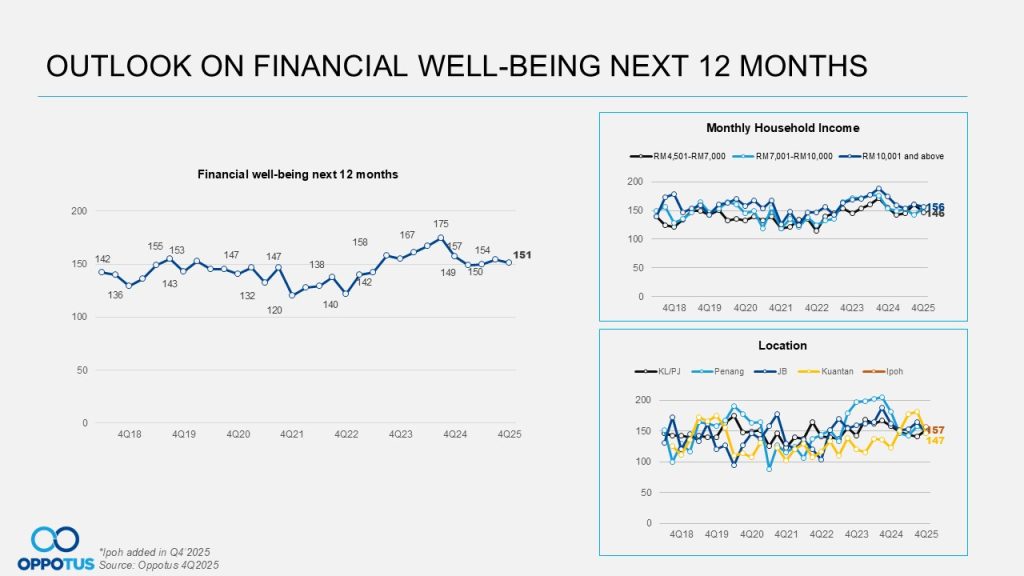
The dip in financial well-being has also impacted the outlook for the next 12 months, as it also saw a 3 point drop from 154 to 151. Looking at the big picture of the Year 2025, the average of the financial outlook for the next 12 months is at a steady and healthy 151 points, a score that continues to show that Malaysians remain hopeful quarter-on-quarter.
During Q4 2025, the government announced the second round of RM100 Sara payout to all Malaysians aged 18 and above, expected to receive in February 2026, to assist Malaysians to prepare for the Ramadan month and Chinese New Year celebrations.
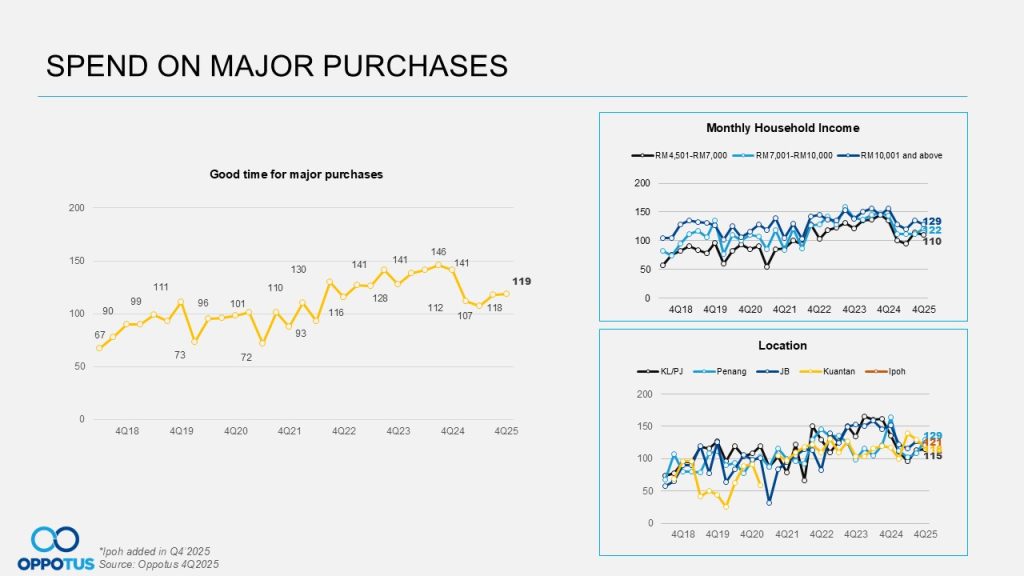
Despite the dip in financial well-being, consumer confidence towards making major purchases is holding steady, scoring 119 points vs 118 points in Q3 2025. This uplift could be from the known Double Day sales in the e-commerce market, and it’s a holiday season in the last month of the quarter.
11.11 sales were one of the biggest yet amongst the e-commerce giants (Shopee, TikTok Shop, Lazada) — each of the platforms vied for attention differently, such as TikTok Shop holding a massive LIVE Showdown and bringing over 5 million Malaysians tuning in to connect, and garnered an impressive result by generating approximately 80,000 livestream orders. While Shopee 11.11 achieved up to 14 times more orders during its Big Sales, with 1.3 billion views for both Shopee live and Shopee Video.
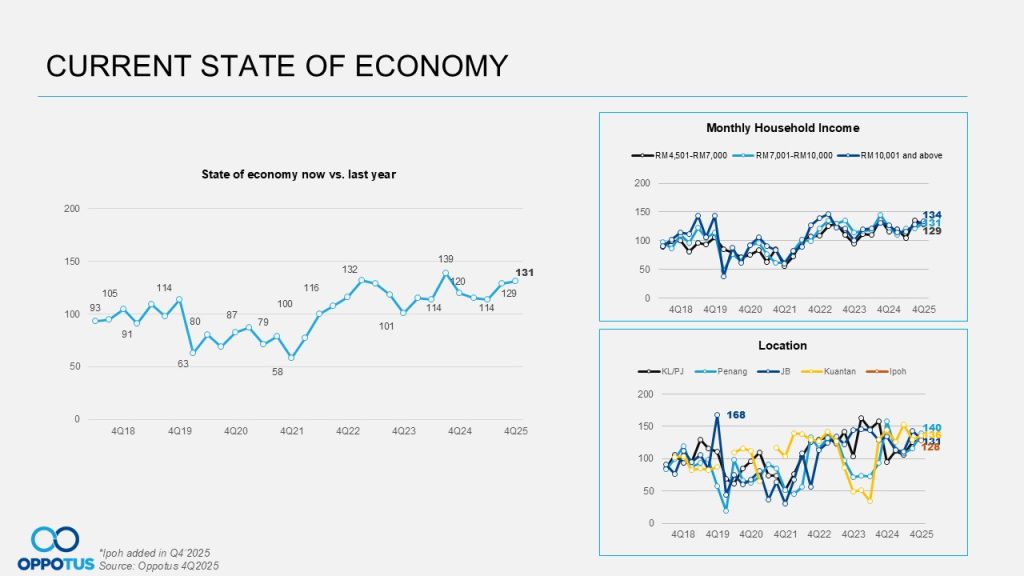
The current state of the economy continues to grow, resulting in 131 points, which is reflected in the GDP shared by Bank Negara Malaysia (BNM). In Q4 2025, the growth of GDP advanced by 6.3% from 5.4% on the previous quarter. This is the fastest pace of economic growth in more than a year. This is contributed by the higher household spend, steady investment activities and continued demand for E&E.
Ringgit in quarter four also improved as its nominal effective exchange rate (NEER) appreciated by 3.8% against currencies of Malaysia’s major trading partners. The ringgit appreciated by 3.9% against the US dollar.
In addition to the latter, Ringgit Malaysia was the star performer in Asia, as it had strengthened more than 9% against the greenback year-to-date (YTD) and even greater 10.1% against the Japanese yen. The outperformance of Ringgit has been attributed to many factors, among them is the political stability and the resilience of domestic demand, including reduction of deficits, as the economy continues to grow at a modest pace.
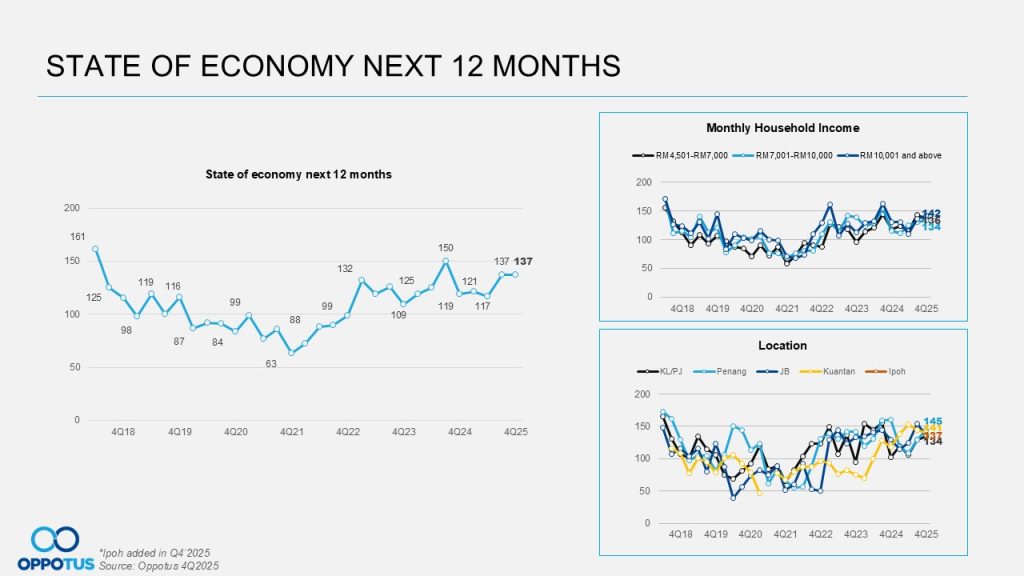
Therefore, positivity continues for economic growth over the next 12 months, with the same expectation of 137 points in both Q3 and Q4 2025. Confidence for the next 12 months was impacted by a few key factors, as the economy is growing with a stronger Ringgit, GDP, and moderate headline inflation.
In quarter four, Malaysia’s headline inflation remained similar to Q3 at 1.3%. The increase was driven by price increases in certain core items such as jewellery and watches, with an inflation of 32.3% from 21.8% in Q3 2025. It is likely affected by the sudden gold market price surge to a new high of US$4,043 per ounce in early October 2025. The commodity has outperformed global stock market recoveries, cryptocurrency, the US dollar, and oil.
While in the middle of quarter four, Bank Negara Malaysia (BNM) announced in November 2025 to maintain the Overnight Policy Rate (OPR) at 2.75% at its last monetary policy committee meeting for the year. Continuous expansion in global growth remains supported by resilient labour market conditions, moderating inflation, less restrictive monetary policy and supportive fiscal policy. The conclusion of more trade negotiations has, to some extent, eased global uncertainty.
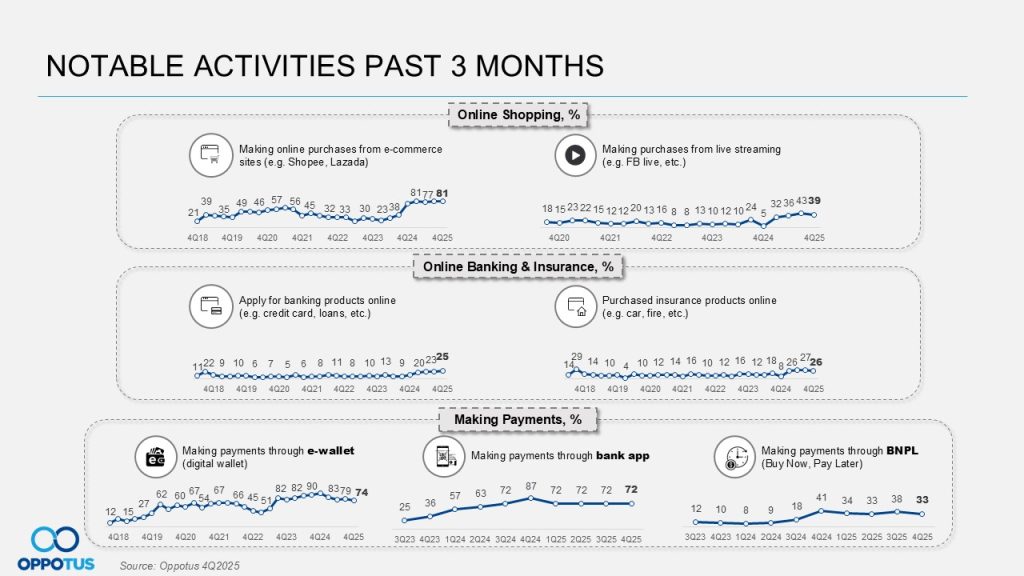
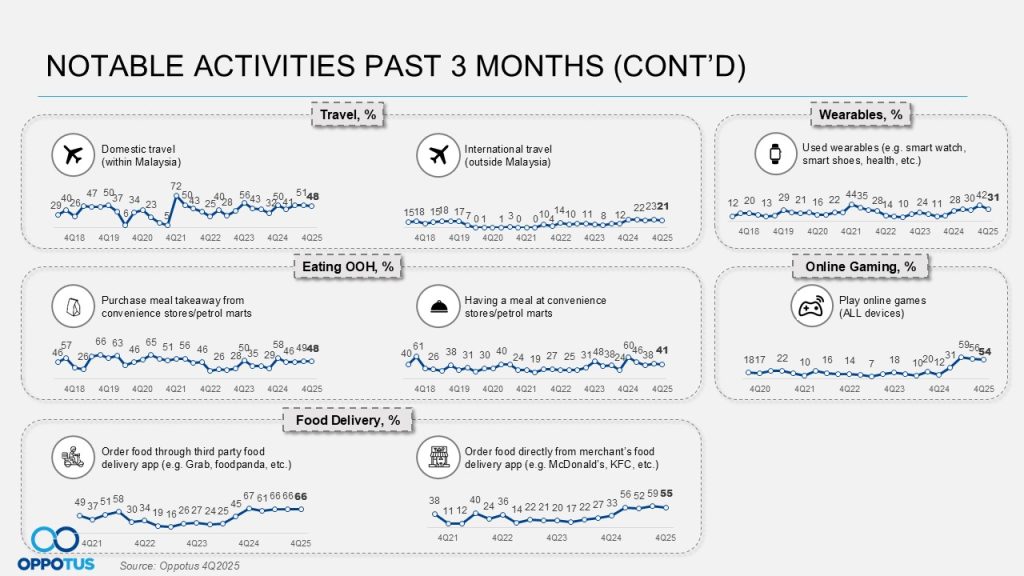
Let’s dive deeper into the activities, there are slight increment and/or stability from the previous quarter. Making online purchases from e-commerce sites has seen a steady increase to 81%. Quarter four was the peak period of online sales due to the Double-Day and year-end season. The three major online platform brands, TikTok, Shopee, and Lazada, are leveraging this period with their unique strengths, such as livestreamed celebrity appearances and offline events, to AI-driven shopping tools. Livestream was heavily influenced by Shopee with a “daily superstar livestream”, allowing fans to interact with their favourite celebrities while grabbing exclusive deals from top brands.
Ordering food through third party food delivery app has remained stable for three quarters in a row since quarter two 2025 at 66%. It has become part of Malaysians consumer norm to order food delivery from a third party. While ordering food directly from the merchant’s app has a slight dip of 4% from 59% to 55%.
Another notable is the Wearables, as there is a major dip — resulting in 31%. Although there is a significant dip, there were a handful of product launches during the period. Apple’s AirPod Pro 3, Watch Series 11, SE 3 and Ultra 3 were made available for pre-order. Later in the same quarter, Apple also announced its watch had been granted approval by the Medical Device Authority (MDA) for the Apple Watch’s hypertension notification feature. It is expected to be available for Malaysians in early 2026. Not to forget, the COROS Pace 4 was also made available in December. It has an endurance reputation among runners as it can go up to 2 weeks without charging.
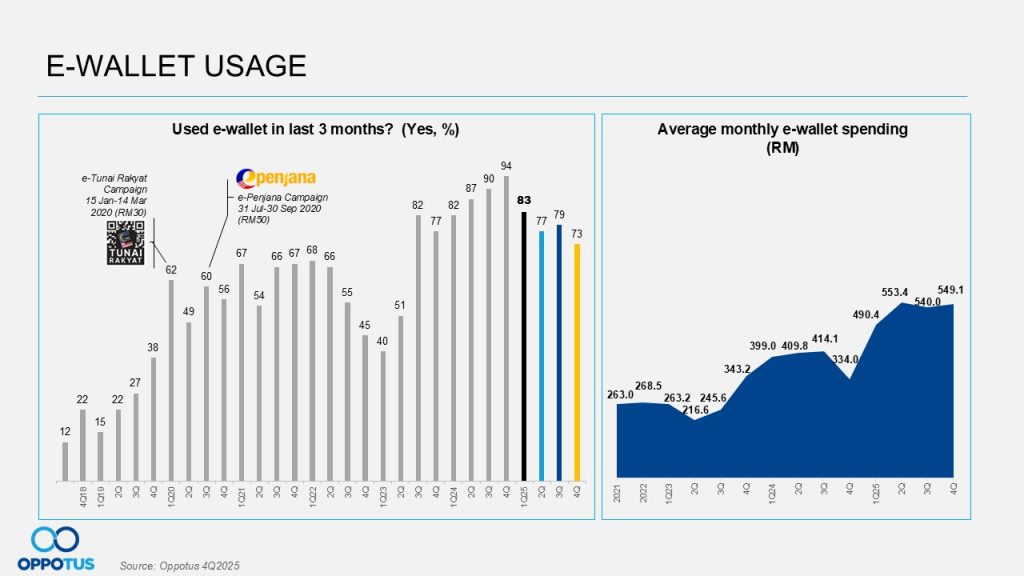
Moving towards the e-wallet landscape, the usage has declined from 79% to 73% quarter-to-quater. This dip does not bring a significant concern as a whole; it has been hovering within 70-80% within the year. Most notable in the usage is that the average monthly spend has been increasing, resulting in RM549.10 in quarter four as the highest spend since Oppotus’ tracking. Consumers have become much more confident in the safety features, and hope it continues to improve.
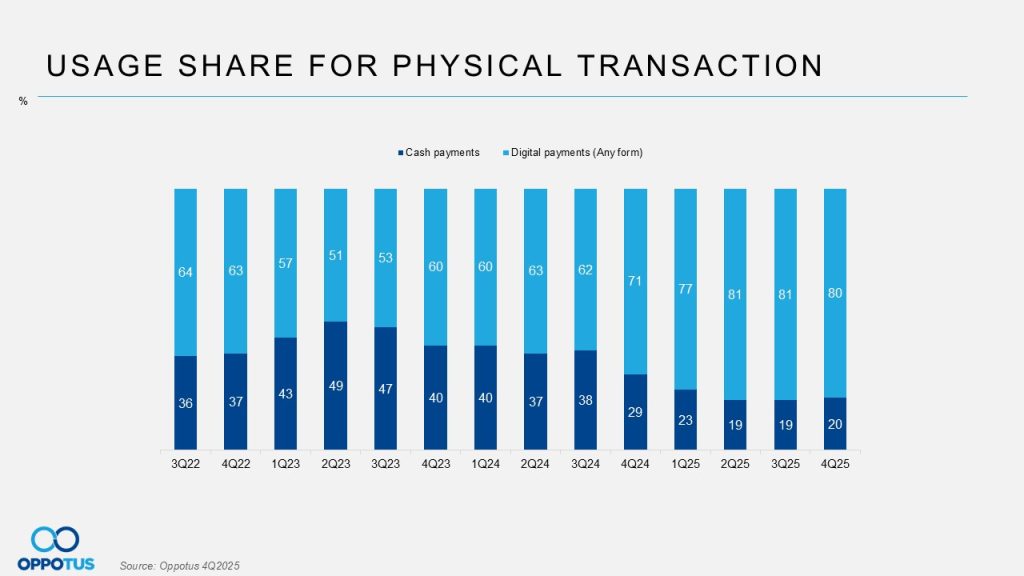
Since Q2 2025, Malaysians’ usage share for physical transactions has plateaued as consumers choose to use digital payment in any form over cash. Even though in quarter four there is a minor change, it is not visible enough as cash is up by 1% only. This result mirrors Oppotus’s MOM Q3 2025 expectation to roll over, and it is likely to roll over into 2026 behaviour.
Quarter-to-quarter, the government has encouraged the digital payment usage and continues to use the digital payment platform to provide aid to Malaysians. Quarter four was the month that consumers quickly utilised the RM100 MySara for all Malaysians above 18 years old by 31 December 2025, and also Sumbangan Tunai Rahmah (STR) to assist the Deepavali celebration.
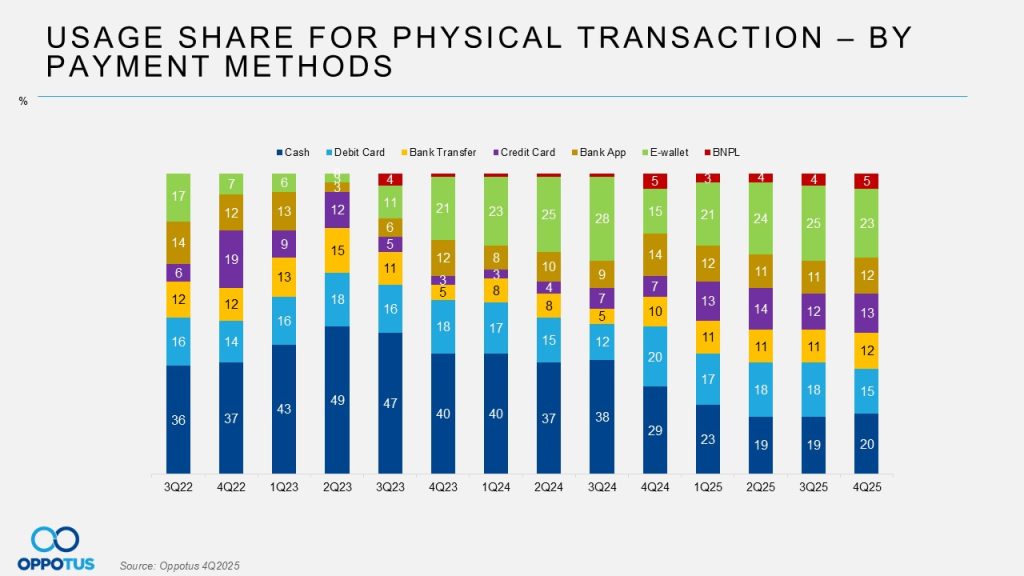
That said, the detailed breakdown of the usage share of physical transactions also mirrored quarter three’s report with no significant difference. E-wallet stands slightly lower of 2% from the previous (23%) but is still the dominant mode. Followed by Debit Card, which is considered to have the highest dip (3%) from the previous quarter, resulting at 15%. It was then followed by Bank App (12%).
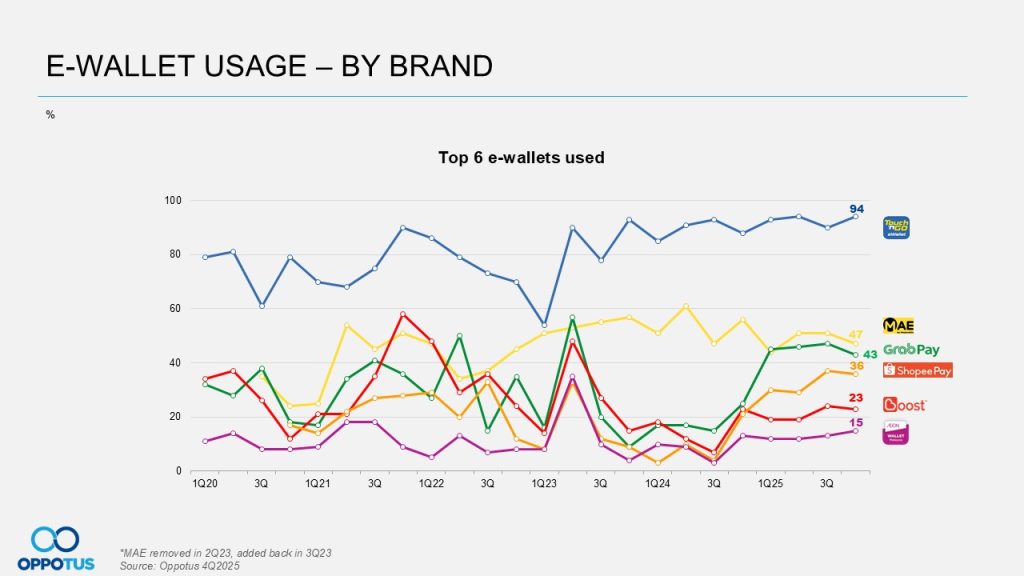
Touch n’ Go continues to be the number 1 brand leading the e-wallet sector (94%), followed by MAE (47%). MAE positions have been stabilised since 2021; they have scored between 45-55% yearly, which is above GRAB at 20-45%. One notable which is mentioned in our 2025 E-wallet landscape report, BigPay is no longer among the top 6 e-wallets despite having a solid presence in the previous year, now overtaken by the Aeon e-wallet as of 2025.
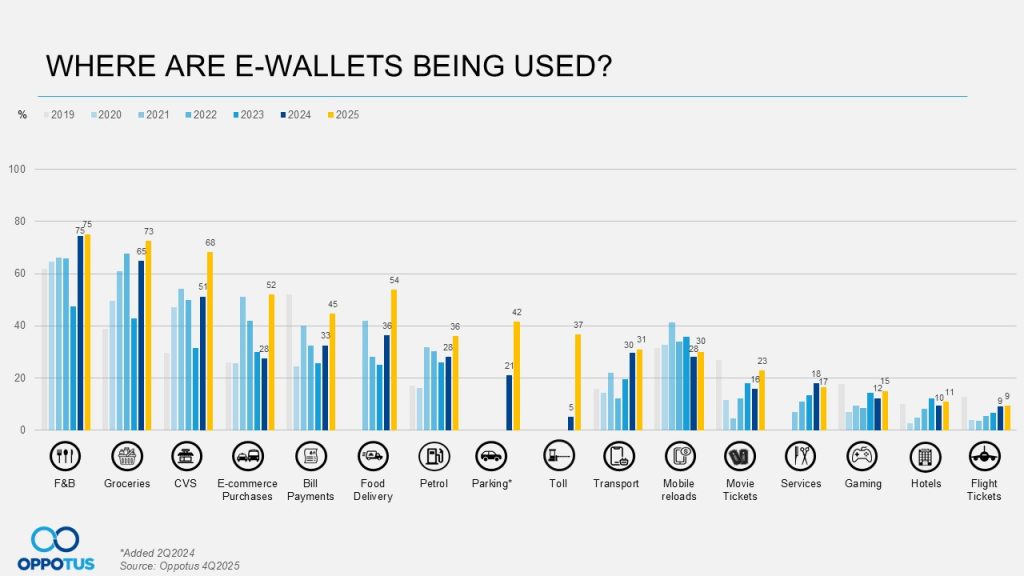
The holistic overview of where e-wallet being used, F&B, Groceries, and Convenience Store (CVS), has been the top three usage since 2020; 2025, it has resulted in the highest record at 75%, 73% and 68% respectively. Parking and tol has the most significant rise at 42% and 37% in 2025 as compared to the previous year. It is possible due to the widespread availability of Touch n’ Go in both categories. Generally, 2025 has been a significant improvement in most categories, not including Services, Hotels and Flight Tickets. These three categories have remained the lowest in e-wallet usage, and it is likely to continue because it can be a bigger purchase item compared to others.
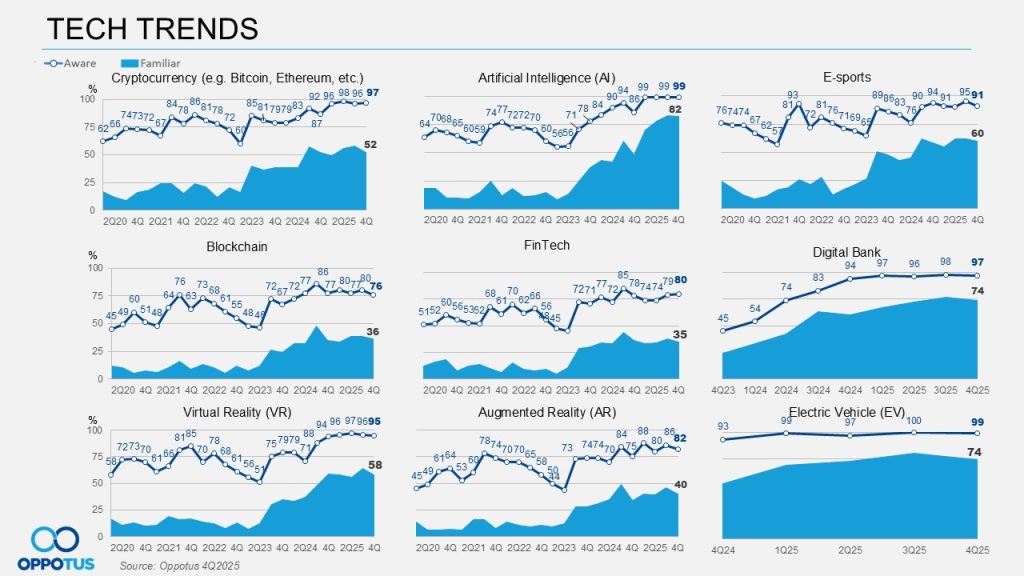
Moving on to Tech Trends, the awareness has plateaued for all categories, as within 2025 it all had steadily scored a 75-95% mark. While looking into the familiarity in quarter four as compared to the previous quarter, it had only a slight 1-2% dip, as it can be seen in AI (from 83% to 82%), e-sports (from 60% to 58%), and Blockchain (from 36% to 34%).
Although there was no significant difference from quarter to quarter, there were a few activities that happened in each category. In the AI category, the education material publisher Sasbadi Holdings is partnering with digital solutions Agmo Holdings to jointly develop Malaysia’s first large language model (LLM), specialising in the education sector. Globally, Google had shared its milestones within the year on the achievement, one of the achievements is the launch of Gemini 3 Flash in December.
EV, on the other hand, had most automotive industries and enthusiasts talking as the tax exemptions will no longer be applicable for fully-imported EVs in 2026. Having said that, there is an expectation that the cost of EVs will rise in 2026. This will impact the affordability of EVs as Malaysia is still in its early stages within the ecosystem.
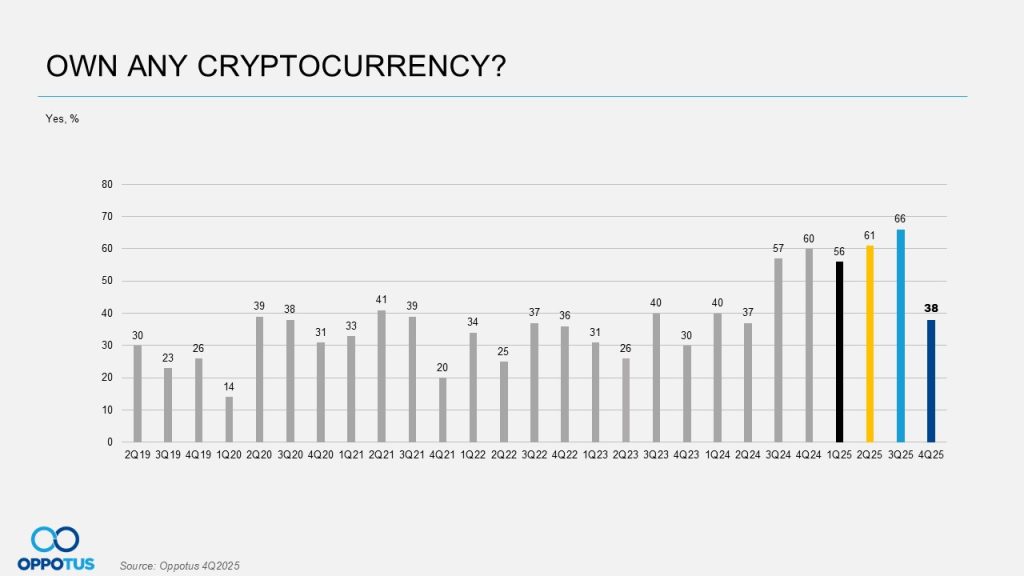
Shifting into Cryptocurrency, it has been a concerning quarter, which reflects the result of ownership at 38% in Q4 2025. It is the lowest percentage dip ever at 28% drop from 66% in Q3 2025 against 38% in Q4 2025. During this period, the global economy and geopolitical tension have impacted the cryptocurrency market heavily to a concerning drop.
Since October, Bitcoin has had a constant 5 consecutive day decline at a near $110,000 per BTC and landed 5% lost as the first loss during the historically bullish month since 2018. It rolled over to November and fell below $108,000 after a 7-year “uptober” streak.
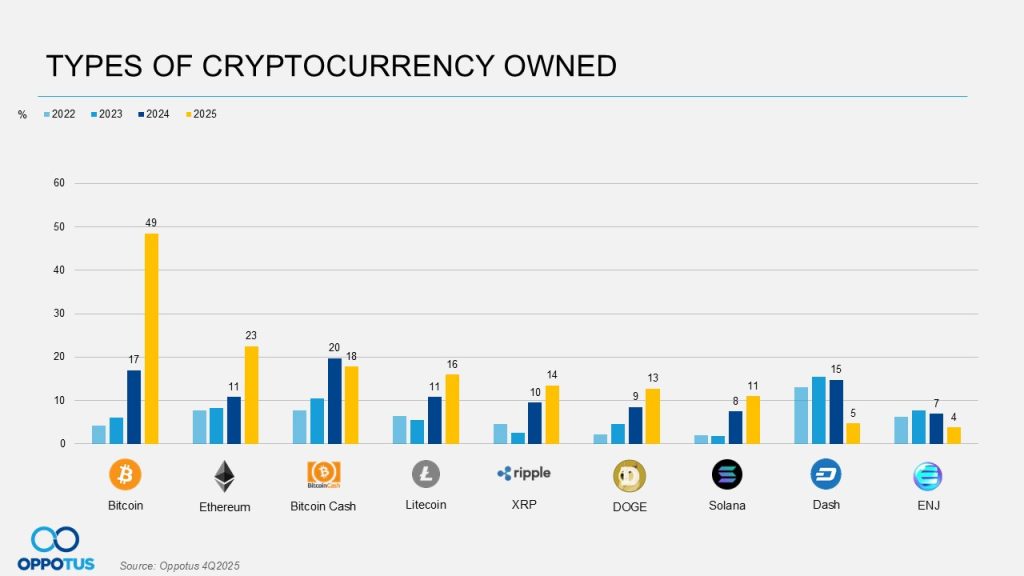
Even though the ownership of cryptocurrency has declined drastically in Q4 2025, when it zoomed into the respective type of cryptocurrency owned, Bitcoin scored the highest ownership at 49%. Followed by Ethereum (23%) and Bitcoin Cash (18%). One notable highlight is Dash cryptocurrency, as it had the largest dip in ownership from 15% in 2024 to 5% in 2025.
Oppotus stays committed to acquiring insights through continual analysis, offering a unique perspective on the country’s trends and consumer landscape.
Note that the opinions presented regarding Malaysia and its people reflect the views of Malaysian citizens aged 18 and above, from all income segments, residing in key cities of the Peninsular, and selected in a representative manner.
For a more granular analysis of the data above, contact us at theteam@oppotus.com. Our team of experts would be pleased to facilitate a comprehensive review and offer customised recommendations tailored to your needs. Alternatively, explore the omnibus solution to incorporate additional measures for your business through our MOM study.