
Social Sport Evolution: Broad Habits on Pickleball, High Passion for Padel

Malaysia’s racket-and-paddle sports scene has entered a new phase. Pickleball has now settled into everyday life for a growing base of Malaysians, supported by an increasingly packed tournament calendar and corporate backing. Padel, meanwhile, is still growing in awareness among Malaysians. Though still in its infancy locally, it is already showing signs of a different kind of momentum, smaller in reach, but fiercer in intensity, and increasingly backed by its own wave of brand attention and grassroots development.
As these two sports are evolving side-by-side, it is believed that pickleball is becoming a broad-based habit as it is seen to have much more court space built by the city, developer and individual corporations. While padel is emerging as a high-passion pursuit, the frequency of playing is higher than pickleball.
Pickleball: From Trend to Everyday Habit
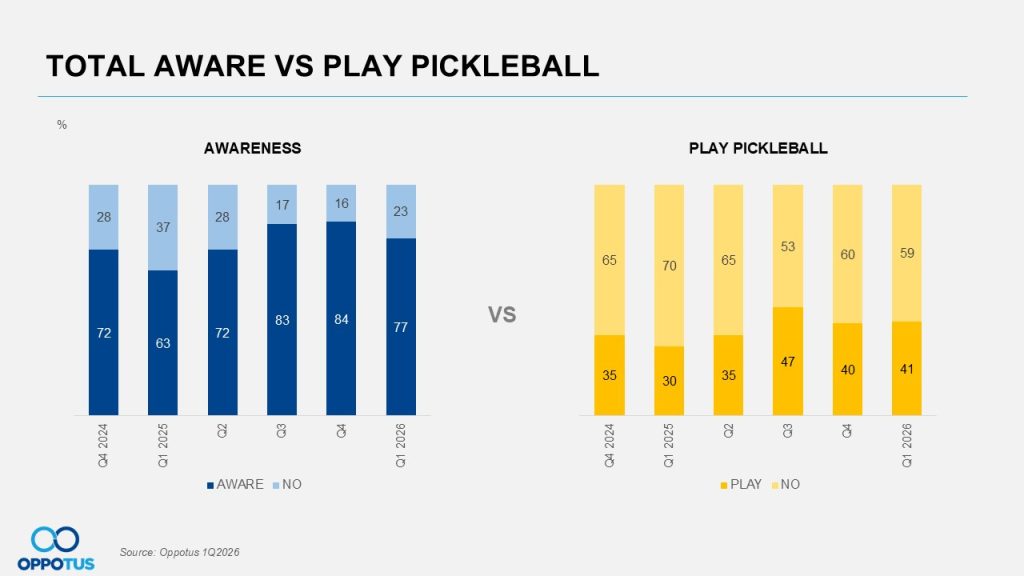
Pickleball’s awareness levels have remained consistently high over the past year, holding between 63% and 84% since Q4 2024, and settling at 77% in Q1 2026. Play conversion has followed a similar upward arc, climbing from 30% in Q1 2025 to 41% in Q1 2026. With awareness comfortably above the halfway mark, pickleball has clearly cleared the chasm from early adopters into the mainstream “early majority,” pragmatists who need to see a sport proven and normalised before jumping in.
This sustained visibility is likely due to brands/corporate are participating in sponsorship and/or organising the tournament. The well-known PPA Tour Asia, the region’s professional pickleball circuit tour, returns for the Panas Kuala Lumpur Open in May put the country back in the regional spotlight. Beyond professional tours, brand-backed tournaments have added further fuel: the AmBank Malaysia Pickleball Championship expanded its field to 600 participants with a RM66,000 prize pool in its second edition this June, and Toyota’s upcoming five-city Pickle Tour is set to bring a combined RM175,000 in prizes to courts across Sarawak, Sabah, Johor, Penang and the Klang Valley later this year. Together, these events have kept pickleball consistently in the public eye, reinforcing awareness even during quieter seasonal quarters.
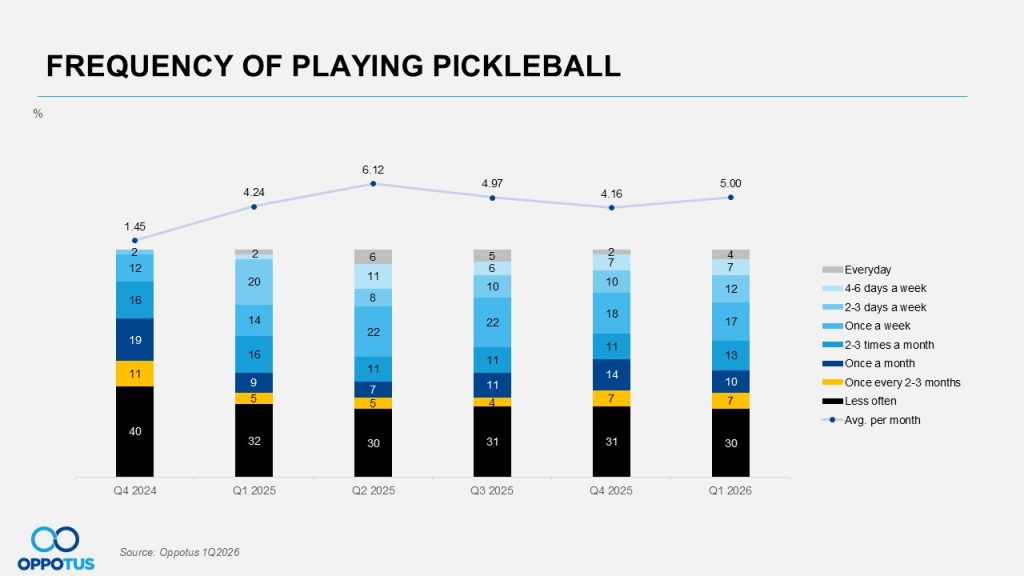
Zooming into the frequency of people playing pickleball, the average sessions per month rose sharply from just 1.45 in Q4 2024 to a steady range of 4–6 sessions across every quarter since. In Q1 2026, players logged an average of 5.00 sessions a month, with 23% of players playing at least 2-3 times a week. This is no longer a novelty weekend activity; it’s becoming a routine, worked into players’ regular schedules the way a gym visit or a weekly dinner might be. The steady drumbeat of tournaments and community events likely plays a role here too, giving regular players more reasons, and more venues, to keep showing up on court month after month.
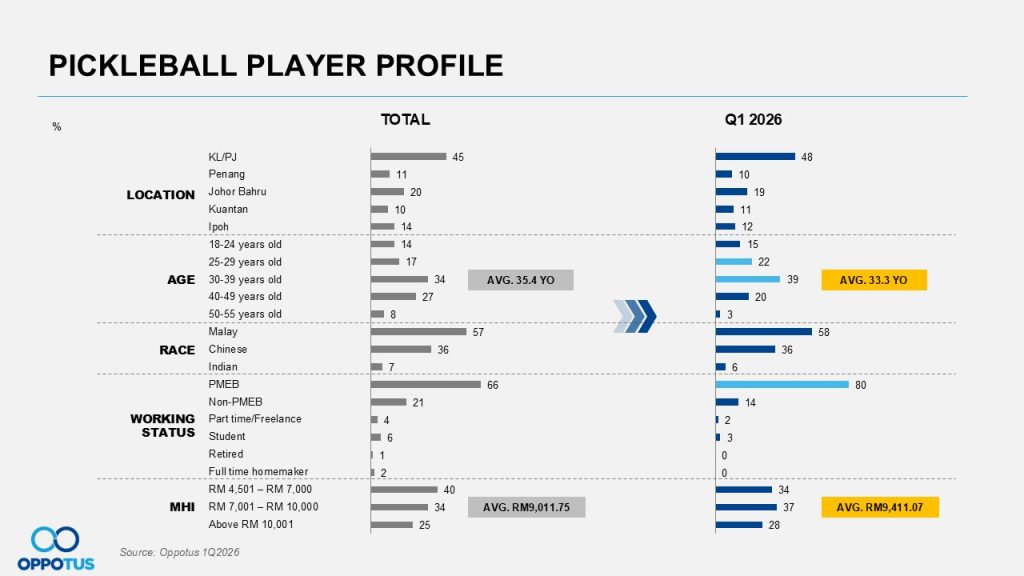
The player profile reinforces this sense of a broad, established base. Pickleball players in Q1 2026 skew slightly younger, with an average age of 33.3, who are usually an active adult group. PMEB professionals continue to maintain their majority at 80% when it comes to working status, with an average household income of RM9,411. It’s a sport that has found its footing across a wide cross-section of urban, working Malaysians, precisely the kind of steady, self-sustaining growth that defines a habit.
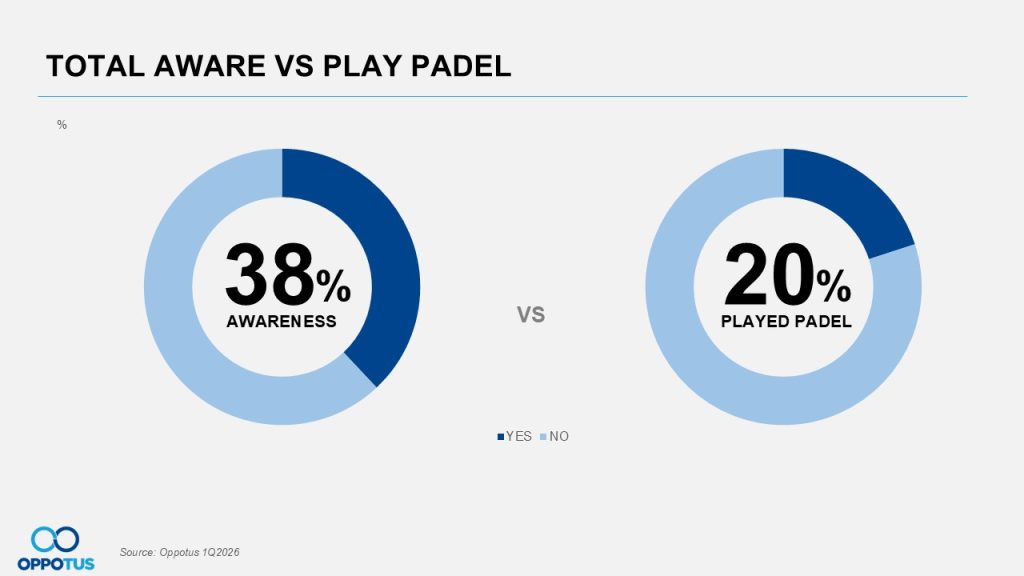
Padel tells a very different story. Awareness sits at just 38%, and only 20% of those aware have actually played the game, a fraction of pickleball’s reach. This places padel firmly in its early market phase, still being discovered by innovators and early adopters rather than the mainstream. Even so, the sport is picking up notable momentum on the ground. Heineken 0.0 recently partnered with local fashion label Motherchuckers on Ground 0.0, an athleisure collection built around Malaysia’s padel scene. While SK Kiaramas in Kuala Lumpur became Malaysia’s first primary school with its own padel court, and Malaysia hosted its first-ever FIP Promises Tour event, an international junior padel circuit. Together, these signal a sport being cultivated from multiple directions at once: brand culture at the top, grassroots and schools at the bottom.
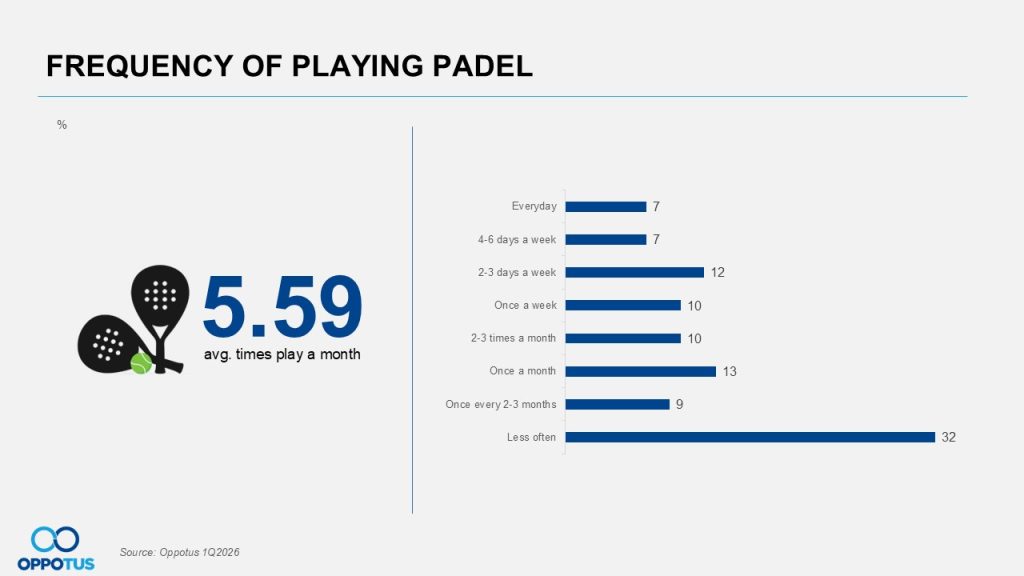
Yet among those who have picked up a padel racket, the intensity of engagement is striking. Players report an average of 5.59 sessions a month, even higher than pickleball’s, despite the sport having a far smaller and newer player base. Notably, 26% of padel players play at least 2-3 times a week or more, a similar concentration to pickleball’s habitual segment, but achieved with a fraction of the total audience. In other words, padel hasn’t yet won over the masses, but the people who do play are hooked.
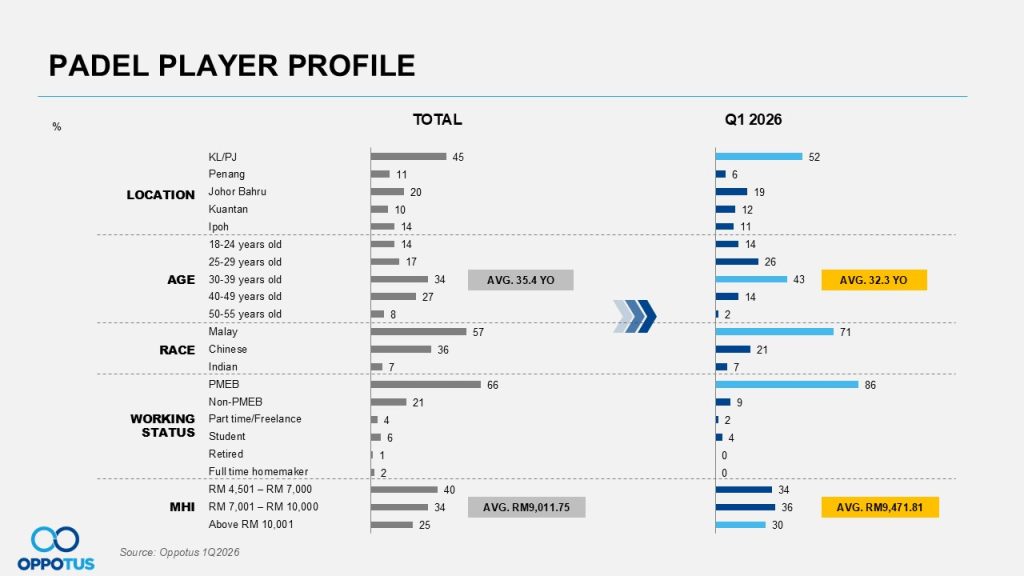
Padel’s early adopters have a similar profile to pickleball’s. Both consist of aged 25 – 39 years old as their majority players, living in KL and PJ, and PMEB-skewed professionals. Padel has landed with an average of 32.3 years old (difference by 1 year younger than pickleball), with an average MHI of RM9,471.81 (difference by RM60.74 more than pickleball’s profile).
Race is only the distinction between both profile, as padel gathered slightly more Malay as compared to Padel, who has a better balance between Malay and Chinese players. This is a tighter, more affluent, more urban niche, the kind of concentrated early enthusiasm, echoed by brand interest and schools alike, that often precedes wider category growth, even though it hasn’t gotten there yet.
Habit vs. Passion: Two Different Growth Stories
Put side by side, the contrast is clear. Pickleball has achieved widespread recognition: high awareness, healthy conversion, and a playing frequency that has stabilised into a routine, propelled in no small part by a steady stream of professional tournaments, corporate sponsorships, and community tours that keep the sport visible across the country. It has crossed into the mainstream and is being carried forward by pragmatists who play because it’s become part of their lifestyle.
Padel, on the other hand, hasn’t achieved that breadth yet, but it doesn’t need to to prove its potential. Its smaller circle of players is showing even higher engagement intensity than pickleball’s much larger base, a strong early signal of genuine passion rather than passing curiosity. If padel follows a similar adoption curve to pickleball’s, current investments, from lifestyle brand partnerships to school courts to international junior tournaments, could be exactly what pulls the sport across the chasm and into the mainstream.
What This Means Going Forward
Both sports point to a broader shift in how Malaysians are engaging with social, court-based sports, not just as occasional fun, but as recurring parts of their routines and identities. Pickleball demonstrates what mainstream adoption looks like when a sport crosses the chasm, driven by visibility, accessibility, and a packed events calendar. Padel offers an early glimpse of what the next wave of racket-sport passion could look like, provided the right infrastructure, marketing, and accessibility continue to follow.
We’ll continue tracking both sports closely as the landscape evolves. If you’re interested in diving deeper into these trends or exploring what they could mean for your brand or business, feel free to reach out to us at theteam@oppotus.com.